Do you experience vision difficulty when darkness falls over Dhaka and the streetlights start flickering on? Also, if you struggle to see as the sun sets, there could be something wrong with your night vision.
Bangladesh is a developing country, where Vitamin A deficiency may cause night blindness (nyctalopia). A World Health Organization report estimates that 250 000–500 000 vitamin A-deficient children become blind each year, and 50% of them die within a year too.
It starts with trouble seeing in less lighted areas due to a condition known as xerophthalmia. This may end up permanent loss of sight, if it is not treated in time.There is good news! Night blindness caused by vitamin deficiency can be cured totally, if detected early.
This article will explain which vitamin causes night blindness, what is the root cause of the deficiency, how you will recognise the symptoms. You will also know the diet, supplements, and medical care helpful to regain normal vision.
If you are interested to learn more, then read our Complete Guide to Night Blindness.
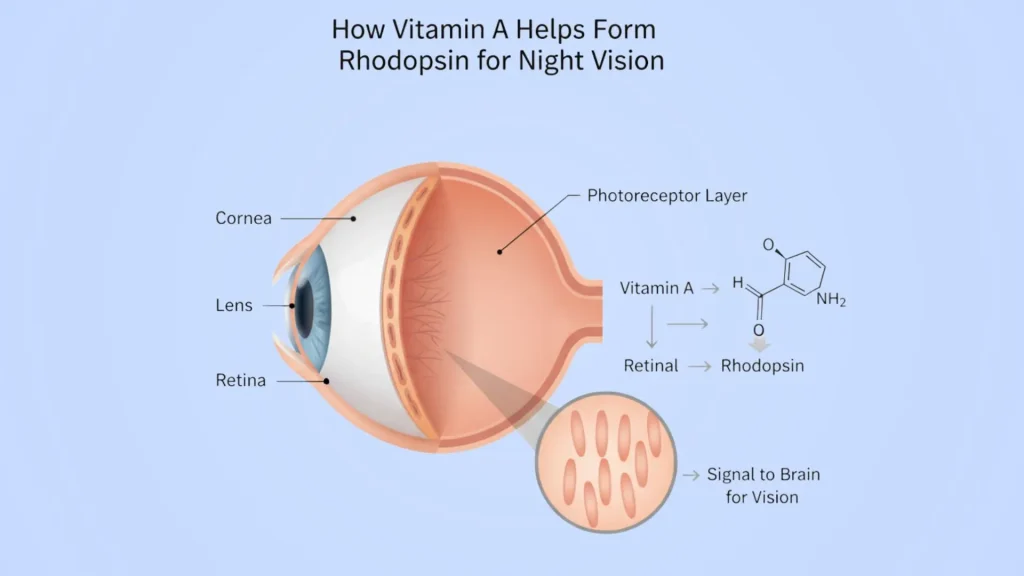
Which Vitamin Deficiency Causes Night Blindness?
The answer is Vitamin A deficiency.
Rhodopsin is a light-sensitive pigment in your retina that allows you to see in the dark. To create rhodopsin, you need something called vitamin A, or retinol.
Certain people are unable to see in the dark because their eyes simply don’t adjust to light due to a lack of vitamin A.
What is vitamin A, and why do we need it?
Vitamin A comes in two forms, and both are fat-soluble:
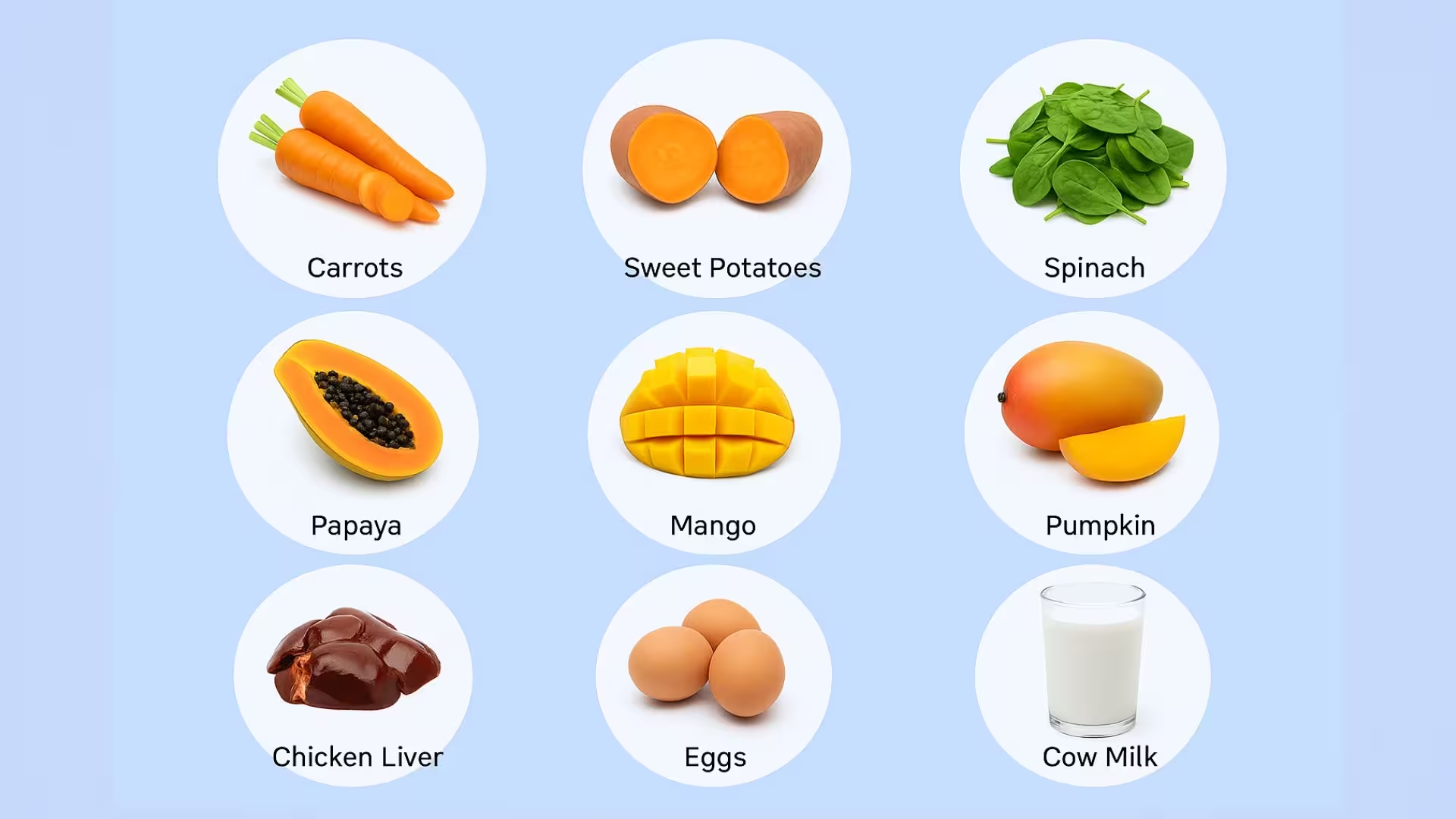
- Animal foods like liver, dairy, eggs, or fish oil are high in vitamin A. These are retinol and retinyl organic compounds from food sources. For instance, consuming chicken liver can increase the amount of retinol in your body.
- The orange or red fat-soluble pigment is the most familiar provitamin A found in orange, yellow, or green fruits and vegetables. In Bangladesh, a common dish is sweet pumpkin, full of provitamin A, which our body converts to Vitamin A.
It is essential for survival and well-being:
- For your eyes and overall health.
- Helps eyes to adjust to dim light.
- Keeps your skin, and cornea healthy.
- Boosting the immune system.
- Crucial for growth and the repair of cells.
These are even more important in Bangladesh, particularly for young children and pregnant women.
Why vitamin A helps you see at night
It is converted into a retinal in the retina needed to make rhodopsin. Rhodopsin actually trigger another important cell of eye, rods, for seeing in the faintest of light and off to the side of your vision.
Your body makes less rhodopsin without enough vitamin A. This can also make it difficult for your eyes to adjust to low-light conditions. This phenomenon can be compared to light and battery, where Rhodopsin is the night vision light. Vitamin A is the battery.
Understanding Xerophthalmia and Night Blindness
You can get xerophthalmia, an eye disease, if you do not have enough vitamin A. The term is derived from the Greek word xeros (dry) + ophthalmos (eye).
Xerophthalmia means dry eye. It can make your eyes feel like there is sand in them or even blind you. It is, according to the World Health Organization, the single largest cause of blindness for kids across the globe.
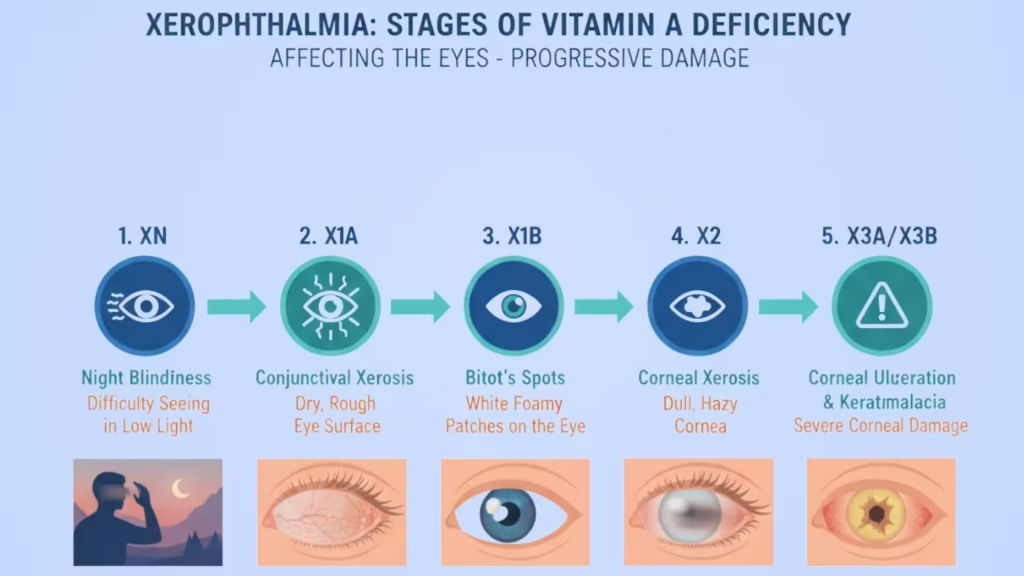
Xerophthalmia Stages (In Simple Terms)
XN: Night Blindness:
- This is step one of badness. Perhaps you can see well during the day, but struggle with low light or night driving.
- The good news is? This stage is completely reversible with the correct vitamin A treatment.
X1A Xerosis of the Conjunctiva:
- What is the conjunctiva? It is a thin, transparent membrane that covers the white part of the eyeball .
- Your eye, with Xerosis, appears dull, dry, and may be wrinkled. It feels rough or sandlike to many people. It can still be treated if detected early.
X1B—Bitot’s Spots (White patches):
- Those are tiny, white, foamy bubbles that appear on the white part of the eye.
- They are a typical sign of vitamin A deficiency, and suggests that the issue has been going on for a while.
X2—Corneal Xerosis:
- The cornea, the clear front area of your eye, appears dim, fuzzy , or cloudy. Your vision tends to go blurry.
- This is even worse and needs to be addressed right now.
X3A/X3B: Ulcer of Cornea:
This is where it is most dangerous. Permanent eyesight loss can occur if treatment isn’t available immediately.
• X3A: Painful sores or ulcers form on the cornea.
• X3B: The cornea may begin to soften or melt.
Night blindness: the first sign of vitamin A deficiency
Night blindness is typically the first sign that you should be eating more vitamin A. You can change this. People may not even realize a problem exists until they notice changes in their eyes, such as Bitot’s spots.
Many people come to the Bangladesh Eye Hospital who have neglected their sign of night blindness for many months. Identifying and treating issues early in life can prevent damage to the cornea, as well as a lifetime of blindness.
They could eventually get back to living normally with early care, and the hospital is a big part of that.
Vitamin A Deficiency Symptoms: Beyond Night Blindness
First Signs of Eye Issues
- Nyctalopia is when you don’t see in the dark, so well
- Xerosis causes dry, gritty eyes.
- Photophobia implies that you can’t tolerate bright light.
- Your adaptation to the dark takes longer than usual.
- Eyes feel tired with blurry vision.
How Eye Symptoms Can Deteriorate (If Not Treated)
- White patches (Bitot’s spots) may appear on your eyes.
- The surface of your eye can dry and look wrinkled.
- You may also get ulcers and cornea xerosis.
- The eye can scar, and you may lose your vision.
Symptoms that appear throughout the body
If you don’t get enough vitamin A:
- Your skin becomes dry and rough (which is known as follicular hyperkeratosis), and you might also be unable to see properly.
- You may even get lung or stomach infections more frequently.
- Children may not develop properly.
- You may have difficulty getting pregnant and giving birth to a baby, as well.
- Your hair and nails may become weak.
Who Is Most at Risk?
The following groups are most likely in danger:
- Children under 5, particularly where there’s not enough help;
- Pregnant or nursing women who need more food;
- People who aren’t getting enough food or who are eating only a few kinds of food.
- Those with malabsorption diseases like Crohn’s disease, Celiac disease, or Pancreatitis would also be affected.
- Those who drink too much alcohol or have liver disease are also at risk.
They are at heightened risk in Bangladesh because they cannot afford nutrient-rich food, animal protein, or seasonal fruits.
What is the cause of vitamin A deficiency and night blindness?
What is wrong with you:
- Not eating an adequate amount of vitamin A-rich foods such as liver, fish, eggs, green leafy vegetables, or orange coloured veggies.
- When your body can’t absorb fat very well, you need fat to get vitamin A.
- When you are growing, pregnant, and ill.
- You are unable to store it because of liver disease, a lack of zinc, or protein.
Why Vitamin A deficiency is the cause of night blindness
- Vitamin A helps to produce retinal and rhodopsin.
- They help the rod cells in your eyes see in the dark.
- Your body makes less rhodopsin without enough vitamin A.
- The rod cells stop working, and you go blind at night.
If these conditions prevail, a child at a remote village school won’t be able to see the blackboard. This is bad for their eyes, but it also makes it difficult for them to learn and grow.
Foods for Night Blindness: Best Vitamin A Sources
Adding these foods to your diet can restore and maintain healthy vitamin A levels:
| Food | Vitamin A (IU/100 g) | % Daily Value | Availability in Bangladesh | Preparation Process |
| Beef liver | ~16 900 | ~338 % | Year-round | Bhuna / curry |
| Chicken liver | ~11 000 | ~221 % | Year-round | Curry |
| Carrots | ~16 700 | ~334 % | Year-round | Salad / juice / dal mix |
| Sweet potatoes | ~14 200 | ~284 % | Winter | Boiled |
| Spinach (Palak) | ~9 400 | ~188 % | Winter | Curry / lentil mix |
| Pumpkin (Misti Kumra) | ~8 500 | ~170 % | Seasonal | Curry / fish mix |
| Mango | ~1 100 | ~22 % | Summer | Fresh / juice |
| Papaya | ~950 | ~19 % | Year-round | Smoothie / fresh |
| Eggs | ~540 | ~11 % | Year-round | Any form |
| Cod liver oil | ~30 000 (per tsp) | ~600 % | Imported supplement | 1 tsp daily (doctor advice) |
Provitamin A vs. Active Vitamin A
- Active vitamin A (retinol) is found in animal products, and your body can use it as is; however, too much retinol can be toxic.
- Provitamin A (colorful fruits/vegetables) sourced from vegetables is better for you because that can be safely converted to vitamin A by the body.
To ensure you’re eating a balanced diet, consume both types.
Helpful tips for Bangladesh
- Eat spinach, pumpkin or carrots every day.
- You may be exposed to a lot of vitamin A if you eat liver once a week.
- Add a little oil to your vegetables so that they absorb more.
- Use seasonal fruits like mangoes and papayas.
Get the right Vitamin A as per Doctors Advice
If it doesn’t improve with simple dietary adjustments, or if the deficiency is severe, you’ll need to take vitamin A supplements by prescription.
When to Supplement:
- You have a blood test that indicates you are deficient in vitamin A.
- Bitot’s spots or severe xerophthalmia is seen.
- Pregnant women in high-risk areas
- Children with poor nutrition.
- Individuals who suffer from malabsorption
Common Forms of Supplements
- Retinyl palmitate or retinyl acetate
- Plant based capsules (safe and not toxic)
- Cod liver oil (with vitamin D)
- Multivitamins that contain vitamin A
Dosage and Healing Time
- For children from 6 to 11 months, an oral dose of 100,000 IUs (International Units) is recommended
- Children (≥12 months of age): one dose of 200,000 IU + administration according to follow-up.
- Adults: 10,000 to 25,000 IU per day for a couple of weeks
- Pregnant women: up to 10,000 IU daily
Most patients experience a recovery in 2 to 4 weeks, and most regain their night vision within two months of starting treatment.Important: Don’t self-prescribe medicine. Excessive animal based vitamin A can be toxic and lead to headaches, vomiting and liver damage. It is safer to take plant sourced vitamins on its own.

Long-Term Care and Prevention
It is easier to prevent vitamin A deficiency than to cure it. Here’s how to protect your eyesight:
Dietary Prevention
- Eat a mix of foods, including green leafy and orange vegetables.
- Take some liver and eggs from time to time, some milk (animal products).
- Whenever possible, select cereals, milk, dairy products, rice, and salt.
- Cook with healthy fats to aid your body in absorbing nutrients.
Bangladesh’s National Programs
Every six months, Bangladesh offers a Vitamin A Supplementation Campaign for children between 6 – 59 months via schools and EPI (Expanded Programme on Immunization) centers.
Monitoring the risky populations
- Pregnant women should not take prenatal vitamins unless advised by their doctors.
- Children: watch what they eat and how they grow.
- Patients with malabsorption: treat the underlying cause.
When to Visit Dr. Masud Hasgmee
If your child has any of following do not hesitate to book an appointment for professional review:
- Issues with poor nighttime vision.
- Develop a dry, white, and foamy substance on the white part of the eye.
- Eyes that are dry or gritty.
- Recurrent eye infections or difficulty seeing at night.
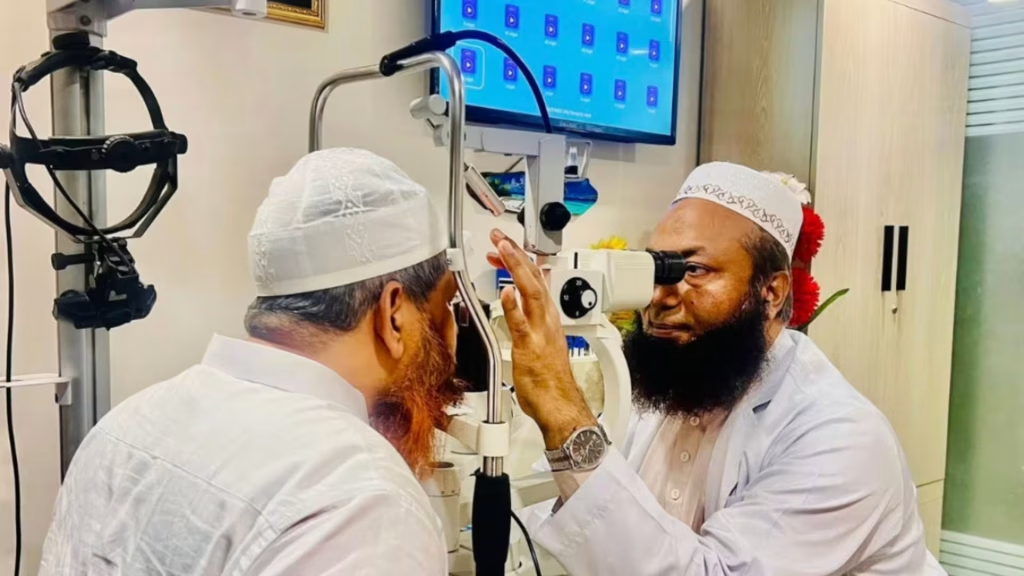
Dr. Hashmee will offer a complete eye exam at Bangladesh Eye Hospital in Malibagh for your child with Slit- lamp Biomicroscopy, fundus examination, and serum retinol estimation. Based on what he sees, he would provide an individual care plan:
- Dietary counseling for sustainable recovery
- Taking vitamin A with supervision
- Follow-up to see how things are going.
- If there are eye issues, they will be addressed.
Dr. Masud Hashmee has been an eye doctor, specifically an ophthalmologist, for over 23 years , and he’s performed more than 2,000 successful retinal surgeries.
He diagnoses patients with advanced techniques and provides them with caring treatment to help them restore their eyesight.
Conclusion
Vitamin A deficiency remains one of the most frequent preventable causes of night blindness. However, it’s also among the easiest to treat when caught early.
But night blindness (or nyctalopia) is the first signal that your body isn’t making enough rhodopsin because it doesn’t have vitamin A.
If you don’t treat it, things can go from bad to worse and result in a condition called xerophthalmia or total blindness that cannot be corrected with glasses, medicine, or surgery.
The encouraging news is that the treatment works amazingly well. Early night blindness can be completely reversed.
Patients have to eat a balanced diet filled with foods rich in vitamin A; taking supplements as prescribed and seeking medical care promptly.
Dr. Masud Hashmee is a doctor at Bangladesh Eye Hospital. He offers evidence-based, patient-centered care.
He uses an effective combination of clinical precision, nutrition knowledge and advanced retinal know-how to both prevent and treat vision.
Those first hints of night blindness are nothing to ignore, schedule your consultation today.
Frequently Asked Questions (FAQs)
1. Which lack of vitamin makes you blind in the night?
A. The leading cause of night blindness is a deficiency of vitamin A, which the body needs to produce rhodopsin, a pigment in the eye that operates best in dim light.
2. What are the early signs that you lack vitamin A?
A. Night blindness, dry eyes and difficulty adjusting to darkness are among the first symptoms. White patches and dry corneas can be present in more advanced disease.
3. Can night blindness be cured?
A. Yes. If it is the result of vitamin A deficiency then you should eat better or take some vitamin A supplements under a doctor’s care.
4. Which foods are good for night blindness?
A. Good natural sources of vitamin A are liver, spinach, carrots, pumpkin, eggs and mangoes. Regular intake keeps and makes your eyes healthy and has them functioning well in the night.
5. How long until I get better?
A. Most patients will experience an incremental improvement in their condition 2 – 4 weeks after starting treatment. It can take as long as two months to heal fully, depending on how bad it is.
6. Are supplements containing vitamin A safe?
A. Yes, but only if doctor tells you to. Vitamin A can be toxic in large amounts, so it is important to see a doctor, especially if you are pregnant.
7. Can children and pregnant women receive vitamin A supplements?
Yes, but the dosage varies according to age and individual condition. Bangladesh’s government supplementation program provides age-appropriate levels of vitamins and minerals for children under 5 and women of childbearing age.
